


🌿Rita Palmer Relationship Master Coach | Guide for Estranged Parents
🧠 Diagnosed. Undiagnosed. Misunderstood.
The Hidden Spectrum of Mental Health (and Why It Matters in Estrangement)
📖 A Story from Both Sides
Part 1: From the Adult Child’s Side
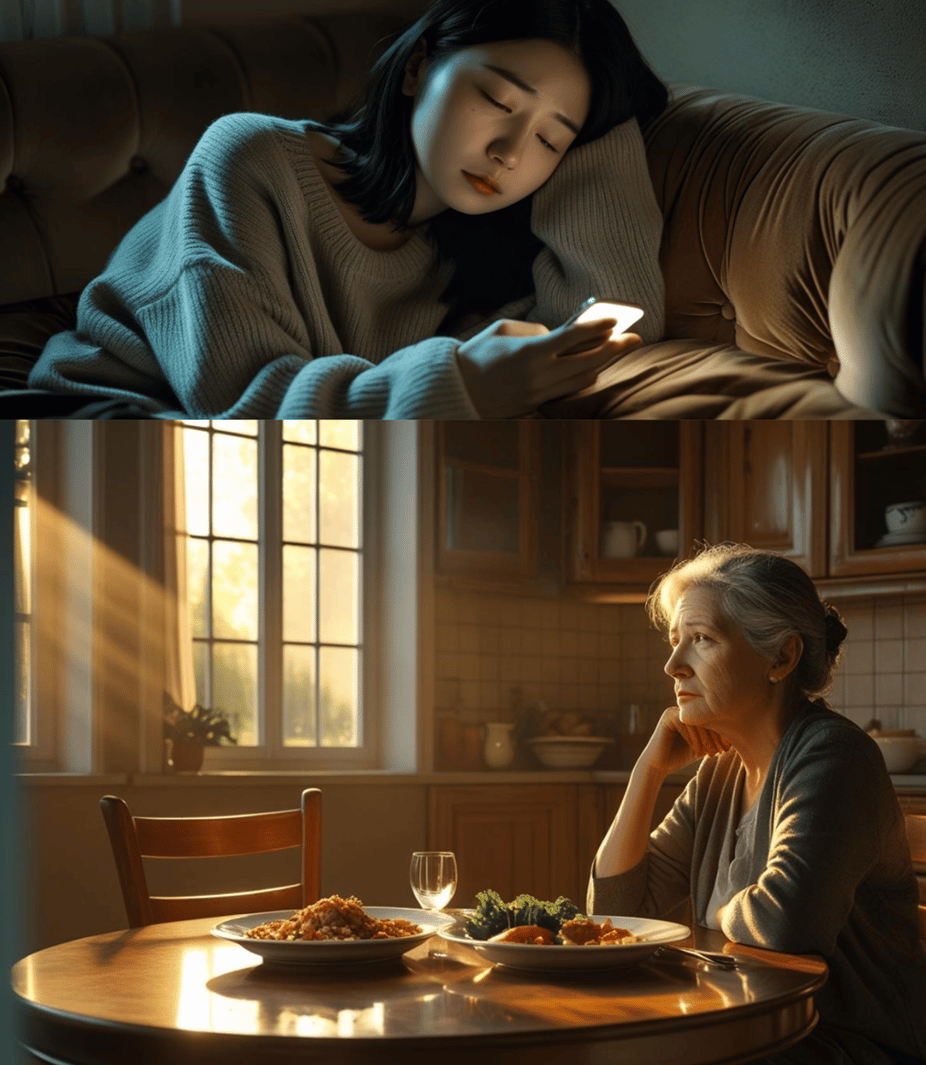
She gets the text:
"Dinner at 6. Hope you’re hungry!"
And something in her chest tightens.
She stares at her phone, thumb hovering. She wants to go.
She doesn’t want to go.
The thought of small talk feels suffocating.
What if her mom says something triggering again? What if she cries? What if no one notices?
She’s been dealing with high-functioning depression for years—undiagnosed until college.
From the outside? She’s bright, composed, successful.
Inside? Numb. Exhausted.
She’s afraid that being honest will cause more guilt than healing.
So she texts back, “Can’t tonight. Busy with work ❤️”
Then curls up on the couch… ashamed, and unseen.
Part 2: From the Parent’s Side
She rereads the text.
"Busy with work." Again.
And something inside her wilts.
She sets the table anyway, out of habit.
Her daughter used to love her chicken soup. Now she doesn’t even come around for holidays.
The silence between them? It’s deafening.
But what hurts more is not knowing why.
Was it that one argument years ago? The tone of voice she used too often?
She wonders if her own untreated anxiety—masked as "worry"—made her controlling.
Or if her tendency to over-function made her emotionally unavailable in all the ways that count.
She never got a diagnosis.
She just thought life was hard. You get through it. You work. You raise a family.
You don’t talk about feelings. You survive.
Now she’s surviving the silence.
And wondering if the pain her daughter carries… began in the place she called home.
Dear Reader,
We hear the words tossed around like labels: narcissist, bipolar, borderline, autistic, avoidant, depressed, anxious.
Some diagnoses are clinical.
Some are assumptions.
Some are whispered through generations like family folklore.
But in the quiet space of estrangement, these words often carry something heavier:
👉 The question that keeps estranged parents up at night:
"Is there something wrong with them... or with me?"
Let’s begin with this truth:
Only a trained, licensed mental health professional can make a diagnosis.
But anyone can experience the pain of behaviors that go unnamed, unacknowledged, or misunderstood.
So let’s talk about what many estranged parents feel but rarely get to say:
- "My child isn’t the same anymore. Something shifted emotionally—and I don’t know what it is."
- "They used to talk to me. Then everything went dark. But they say they’re 'protecting their peace.'"
- "They say I was abusive, but I was just overwhelmed and unsupported myself."
These are not easy reflections.
But they live at the very heart of the mental health conversation most families never get to have.
🧩 Mental Health Exists on a Spectrum
Gabor Maté often speaks about the pain beneath the diagnosis.
He reminds us that behaviors—whether in children or parents—are adaptations to unmet needs, unresolved trauma, or nervous system overload.
What that means for estranged families is this:
Just because someone doesn’t have a diagnosis doesn’t mean they’re emotionally healthy.
And just because someone does have a diagnosis doesn’t mean they’re to blame.
Mental health isn’t black or white. It’s nuanced. It’s layered. It’s shaped by biology, trauma, attachment, lifestyle, culture—and yes, sometimes by silence.
🪞 The Pain of Misunderstanding
Here’s where it gets complicated.
When your child cuts off contact and cites a mental health reason—“I need to protect my mental health,” or *“You’re a trigger to my healing”—*you’re left in emotional limbo.
You’re grieving a relationship with someone who may be:
- Dealing with anxiety, depression, or trauma
- Deeply overwhelmed by their internal world
- Misinterpreting family dynamics through a distorted lens
- Or… in a relationship with their own mental health that they haven’t begun to explore yet
And if you’re the parent…
You may have been living with undiagnosed trauma, stress, or dysregulation for decades—without the words to name it.
Dr. Daniel Siegel calls this the “window of tolerance.” When we’re outside it, we can’t co-regulate, connect, or respond calmly—even with people we love most.
No wonder things break.
💔 Stigma: The Silent Divider
One of the biggest barriers to healing is the shame around mental health—especially in families.
We were raised in generations that didn’t talk about emotions.
That minimized trauma.
That said things like:
- “Toughen up.”
- “Stop being so sensitive.”
- “We don’t talk about that in this family.”
But stigma doesn’t make pain disappear.
It drives it underground.
And what’s buried doesn’t heal—it repeats.
When we’re estranged, the stigma takes on new forms:
- “If I admit I was struggling, they’ll think they were right to leave.”
- “If I question their behavior, I’ll sound like I’m blaming them.”
- “If I talk about mental health, I’ll look like I’m making excuses.”
This emotional double bind keeps families locked in silence—when what’s needed most is language, compassion, and self-honesty.
🔍 The Diagnostic Dilemma
There’s a very real danger when we play “armchair therapist” with each other.
Calling someone a narcissist, or borderline, or emotionally abusive without a professional lens is risky. It can harden the very walls we’re hoping to break down.
That said…
There’s also value in understanding patterns.
👉 Joe Dispenza teaches that emotion creates repetition.
👉 Bessel van der Kolk reminds us that the body keeps the score.
👉 Dr. Nicole LePera urges us to break generational patterns by becoming conscious of them.
So yes—there is wisdom in noticing behaviors.
But here’s the sacred shift:
Don’t label them. Understand yourself.
What activates your nervous system?
What part of their behavior hurts you most—and why?
What beliefs are looping in your body about what happened?
Mental health is not about pointing fingers.
It’s about understanding what’s been passed down so we can stop passing it on.
🔄When Mental Health Becomes the Invisible Wall
Many estranged parents live with the confusion of trying to love someone who won’t talk to them—while being painted as a villain.
It hurts.
It’s real.
And it’s deeply layered.
Sometimes, undiagnosed mental health issues in adult children create narratives that distort reality.
Sometimes, parents’ unresolved trauma makes them reactive and unable to offer the safety their children need.
And sometimes—both are true at the same time.
This is what Brene Brown means when she says:
“People are hard to hate close up. Move in.”
But what if moving in isn’t safe?
What if distance is the only thing holding the fragments in place?
Then you become the one to move inward.
Toward truth. Toward healing. Toward what’s yours to hold—and what’s not.
👁️ Mental Health is Invisible Until It Isn’t
Sometimes it shows up as silence.
Sometimes it shows up as rage.
Sometimes it hides behind a high-functioning mask that looks like success.
And sometimes, it’s so subtle that only estrangement brings it to the surface.
Louise Hay said, “If we are willing to do the mental work, almost anything can be healed.”
Healing doesn’t mean fixing everything.
It means naming what’s true.
Releasing what’s not yours.
And stepping out of inherited silence.
🧠 Your Power Is in Discernment
Mental health doesn't explain everything. But it shapes everything.
And as an estranged parent, your job is not to:
- Diagnose your child
- Take all the blame
- Or deny what happened
Your job is to discern:
- What is yours to carry
- What is unresolved trauma
- And what is no longer sustainable for your peace
Because when you stop waiting for them to explain, you begin to reclaim your power.
🌿 Final Note: Remembering What’s Real
Estrangement is emotional chaos.
And in chaos, the loudest voice is often the most distorted.
But here’s the deepest truth:
You can hold space for someone’s mental health and still hold boundaries.
You can have empathy without enabling.
You can seek understanding without self-erasure.
And above all—you can heal, even when they’re not ready to.
Let them take their path.
You take yours.
And if that path circles back someday, let it meet the most whole version of you—one who knows your worth was never dependent on their diagnosis, their silence, or their return.
📬 Want to explore these topics more deeply?
If you’re an estranged parent navigating mental health dynamics in your family, reach out.
We can explore together—without shame, without blame, and without labels.
📧 rita@parentchildreconnect.com
With clarity and compassion,
Rita Palmer
Relationship Master Coach | Guide for Estranged Parents